Val’s Area Walk
Angela, Andy & Anne joined me & Ezio this morning. Limbo path under water so we kept to the railway line, venturing into the fields at the kissing gate for a look at the wildfowl on the floods.
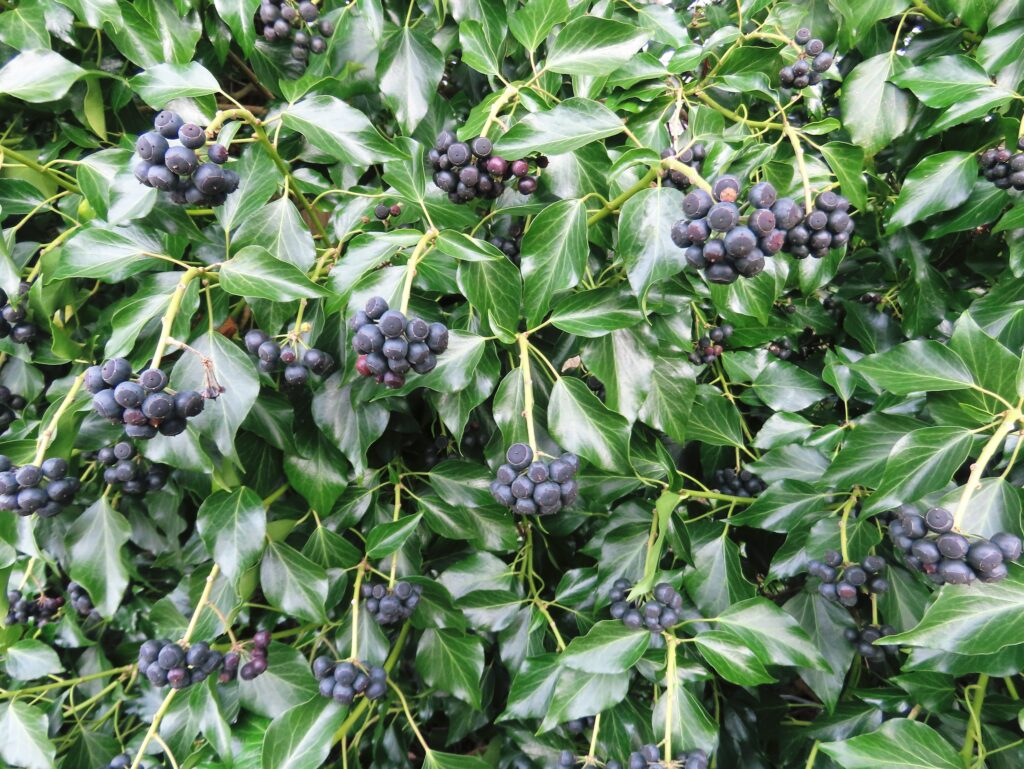
Along the first section we noticed the abundant black ivy berries, which the birds will turn to when they have finished the red hawthorn etc. Song Thrushes and Dunnocks singing, a Great Spot drummed and a Stock Dove was calling from near the Rye Farm track. On the northern part of the floods were a small flock of Shoveler, a Mute Swan and 7 Black-headed Gulls. Just a few Redwings seen in the embankment trees, feeding in the ivy.
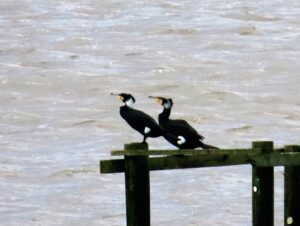
Further down on the very extensive floods were 3 Tufted Ducks (1male and 2 female), an estimated 34 Pintail, 60 Wigeon, 90 Teal, 42 Canada and 20 Greylag Geese. Gulls represented by 70 Black-headed, 45 Common and 23 Greater Black-backed. Near the gulls were over 400 Lapwings to add to 22 counted earlier. There were three Cormorants on the shooting blind, two with the white flank patches and one with a very white nape which is a good candidate for subspecies sinensis which is apparently identifiable by the angle of the gular pouch (whatever that means!) They’re also supposed to be a bit smaller which looks to be the case with the white-naped one. Fuzzy heavily-cropped photo attached if anyone wants to pursue further. Andy & Anne needed to get back, so left once we got back to the railway line, though if they were hoping for a coffee at Berretts they may have been disappointed as it appeared to be closed.
Nearer to Stretham we came across many Redwings, Fieldfares and Starlings, we reckoned 170 Starlings, and 50 each of Redwing and Fieldfare. Joyful noise! We walked to the overflow pit which was devoid of birds, then following advice from Sam that the bridleway at New Inn was likely to be under water, turned back and retraced our steps back to Henfield.